Grundfos SQ CU — Product Design & Discovery Research
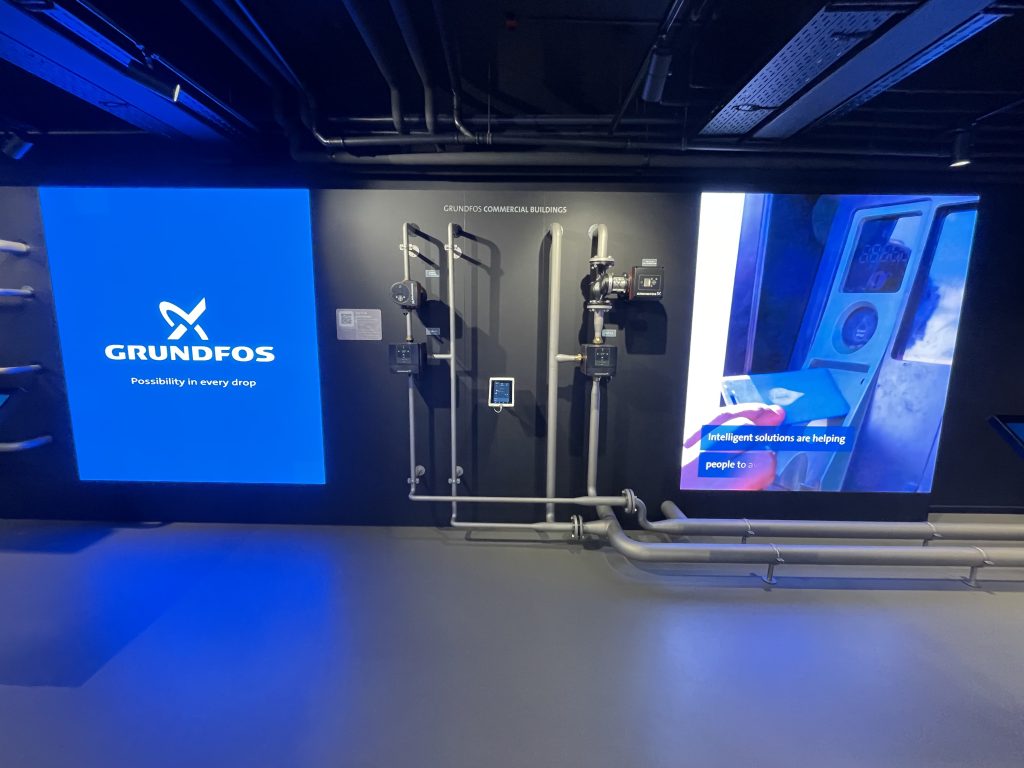
I joined the Grundfos Industry & Water Utility division as a Product Designer and Researcher, working on the SQ CU pump controller ecosystem. Our primary focus is making everyday work easier for professional pump installers and service technicians — the people who are on-site with customers installing new systems, extending existing setups, or solving problems under pressure. My role spans two parallel tracks: delivering production-ready UI for the Grundfos GO app and leading discovery research to continuously uncover the real needs of these professionals.
Role
Product Designer & Researcher
Client
Grundfos, Denmark
About Grundfos
Grundfos is a global leader in advanced pump solutions and water technology, headquartered in Bjerringbro, Denmark. With over 19,000 employees worldwide and annual production of more than 16 million pumps, Grundfos sets the standard for innovation, efficiency, and sustainability in the water industry. The Industry & Water Utility division focuses on digital solutions that help utilities and industrial clients manage water infrastructure more intelligently.
The Product: SQ CU & Grundfos GO
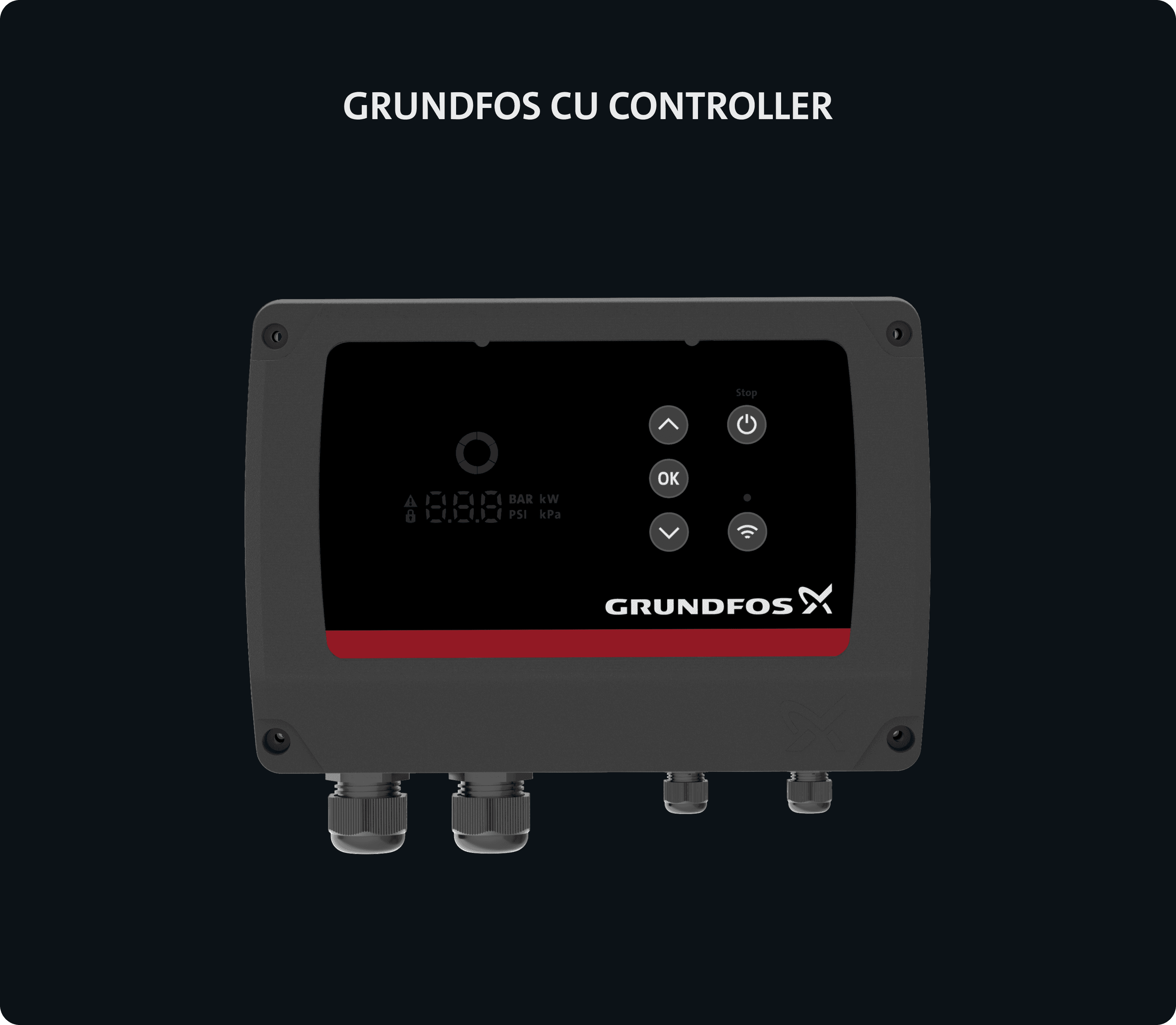
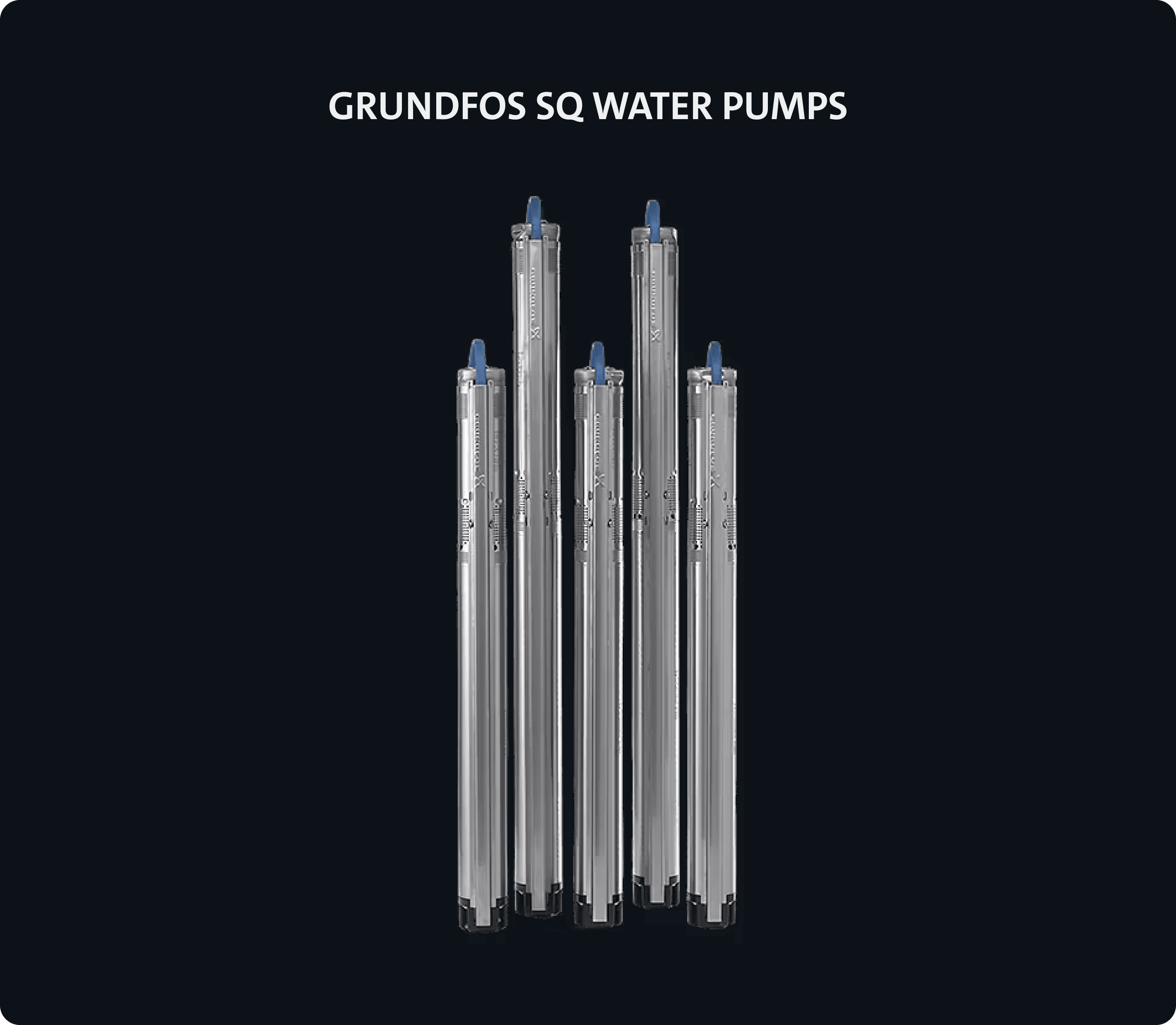
The Grundfos CU is a control unit designed for the SQ family of submersible pumps — widely used for water supply in residential, agricultural, and industrial settings. The CU controller manages pump operations including pressure regulation, dry-run protection, and performance monitoring.
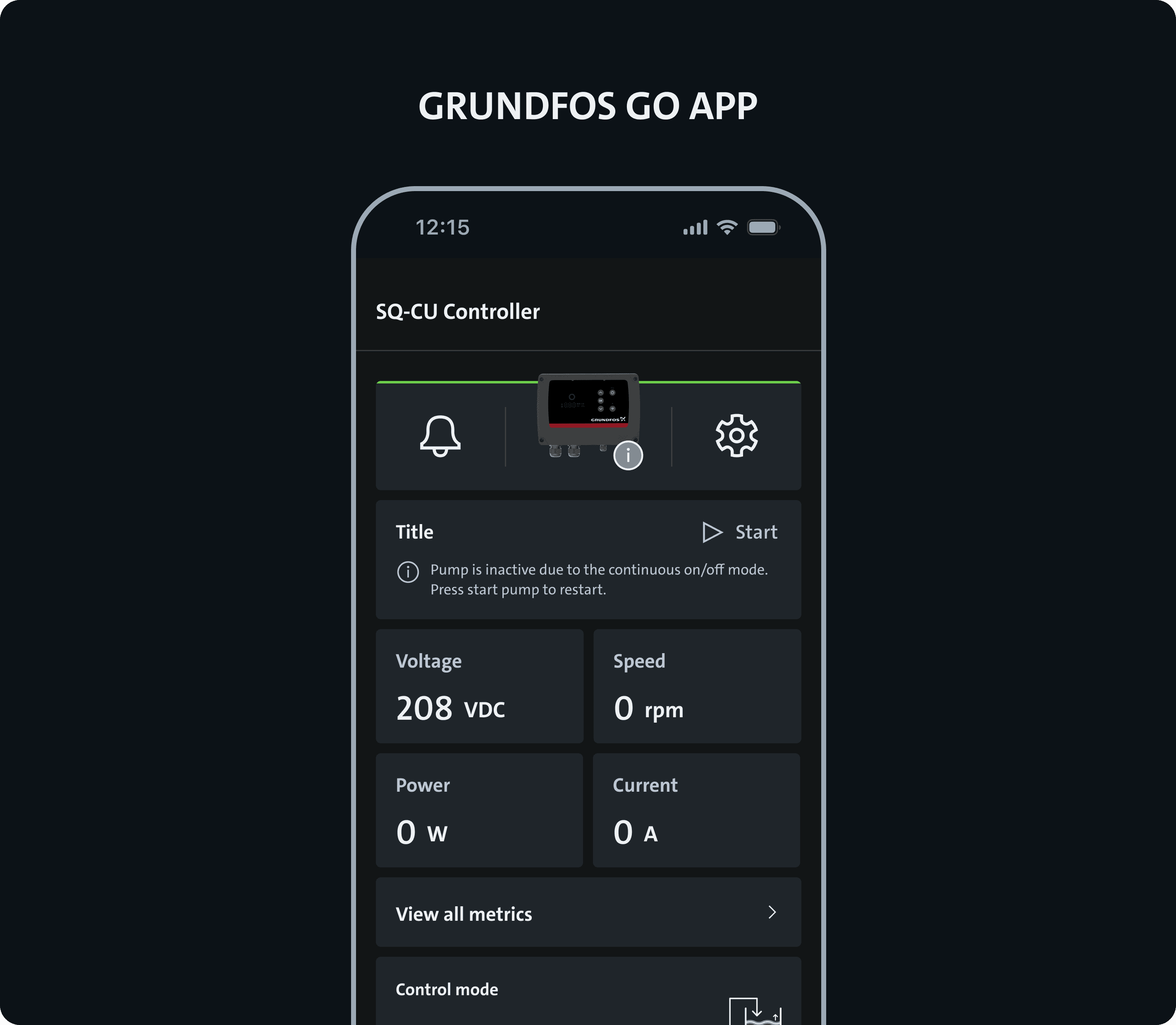
The Grundfos GO app is the companion mobile application that connects to the CU controller via Bluetooth. The SQ CU project on Grundfos GO is a large, feature-rich tool built specifically for professionals. It's the primary interface between the technician and the pump system, and it's where I spend most of my design work.
What installers can do with the app
Pump Status
Instantly check for active warnings and alarms on the connected pump, and read detailed descriptions of specific issues detected — know exactly what's wrong before even opening a panel.
View All Metrics
Access every data point needed — voltage, current, speed, power, pressure — to debug issues and figure out exactly what's causing a problem on-site.
I/O Management
Extend an existing installation by connecting additional hardware to the controller — like extra sensors or external devices — directly through the app.
Configuration & Setup
Commission a new pump, adjust pressure set-points, and configure control modes — all guided step-by-step through the app instead of navigating the controller's physical interface.
Designing for Professionals in the Field
Everything we build is shaped around the reality of professional pump installers and service technicians. These are the people who show up on-site — at a customer's home, a water utility facility, or an agricultural site — and need to get the job done efficiently. They're either making a brand new installation, extending an existing setup with additional hardware, or troubleshooting a problem that needs solving fast.
The Grundfos GO app is their primary companion. Instead of guessing what's wrong with a pump, they can pull out their phone, connect via Bluetooth, and immediately see pump status, check active warnings, dive into detailed metrics, and understand the full picture before making a single physical adjustment. That's the experience I'm designing for — turning a complex, high-stakes situation into something manageable and clear.

Our users are professionals on-site with customers — every feature we ship is designed to make their workday easier.
My Two Tracks of Work
What makes this project unique is that I operate across two distinct but interconnected workstreams within a large, cross-functional team. Each track demands a different mindset — one focused on shipping polished UI at pace, the other on exploring unknowns through structured research.
Track 1: UI Delivery
In the delivery track, I'm embedded in a scrum team shipping new features for the Grundfos GO app. We work in sprints — I participate in planning and refinement sessions, collaborate closely with the product owner and development team throughout, and present work in sprint reviews before handover. It's a fast-paced, structured workflow where design needs to stay ahead of development.
What I do in this track
- Feature UI design — Designing interfaces for new capabilities from initial wireframes through high-fidelity designs ready for developer handoff
- Planning & refinement — Participating in sprint planning and backlog refinement to shape upcoming features, estimate design effort, and align with the product owner on priorities
- Review & handover — Presenting designs in sprint reviews, running handover sessions with developers, and staying involved through implementation to ensure accuracy
- Close PO & dev collaboration — Working side by side with the product owner to translate requirements into design solutions and with developers to resolve edge cases and technical constraints
- Cross-functional coordination — The Grundfos GO app serves many Grundfos branches, so I coordinate across teams to ensure consistency and alignment across the broader product ecosystem
Track 2: Discovery Research
Alongside delivery, I lead a discovery research track focused on understanding what professionals actually need when they're on-site. Every new feature we build starts with a real problem discovered through research — whether it's an installer struggling with a setup flow, a technician who can't find the data they need to diagnose an issue, or a gap in the toolset that forces workarounds. This research feeds directly into the product roadmap.
Research activities
- Installer & technician interviews — Speaking directly with the professionals who commission, install, and service SQ pumps to understand their real workflows, frustrations, and the workarounds they've invented
- On-site observation — Understanding how technicians use the GO app in real conditions — at customer sites, in utility rooms, under time pressure — to identify problems that only surface in the field
- Needs discovery & validation — Identifying unmet needs and testing early concepts with users before committing development resources, ensuring we only build features that solve real problems
- Roadmap input — Translating research findings into actionable insights and recommendations that directly shape what we build next and how we prioritize the backlog
Navigating the Complexity
Designing for industrial IoT is a different challenge than consumer apps. The users — pump installers, water utility engineers, and service technicians — operate under constraints that most designers rarely encounter:
Field conditions
Users often work outdoors in harsh weather, with gloves, in poor lighting. Every UI element needs to be large enough to tap, high contrast enough to read in direct sunlight, and forgiving of imprecise input.
Technical depth
The product involves parameters like flow rates, pressure set-points, and motor protection thresholds. I had to learn the domain deeply enough to design interfaces that feel intuitive to experts without oversimplifying critical controls.
What I've Learned So Far
Working at Grundfos has deepened my appreciation for how product design works at a truly global, industrial scale. A few key takeaways:
- Domain expertise matters. You can't design a pump controller interface if you don't understand pump systems. I invested significant time learning the SQ product line, the CU controller's capabilities, and the end-to-end installation workflow before touching a single pixel.
- Research and delivery can coexist. Running a discovery track alongside a delivery track isn't easy, but it creates a feedback loop where research insights immediately improve what we're shipping, and shipping experience raises better research questions.
- Industrial UX is underserved. There's enormous opportunity to improve tools used by technicians and engineers. These users deserve the same level of thoughtful design that consumer app users get — and the impact of getting it right is arguably even greater.
- Large teams need strong communication. In a big, distributed team, how you present your design decisions matters as much as the decisions themselves. I've sharpened my ability to articulate the “why” behind every UI choice with clarity and confidence.
Interested in working together?
Let's talk.
Give me a call, send an email, or reach out directly on LinkedIn — whichever works best for you.